
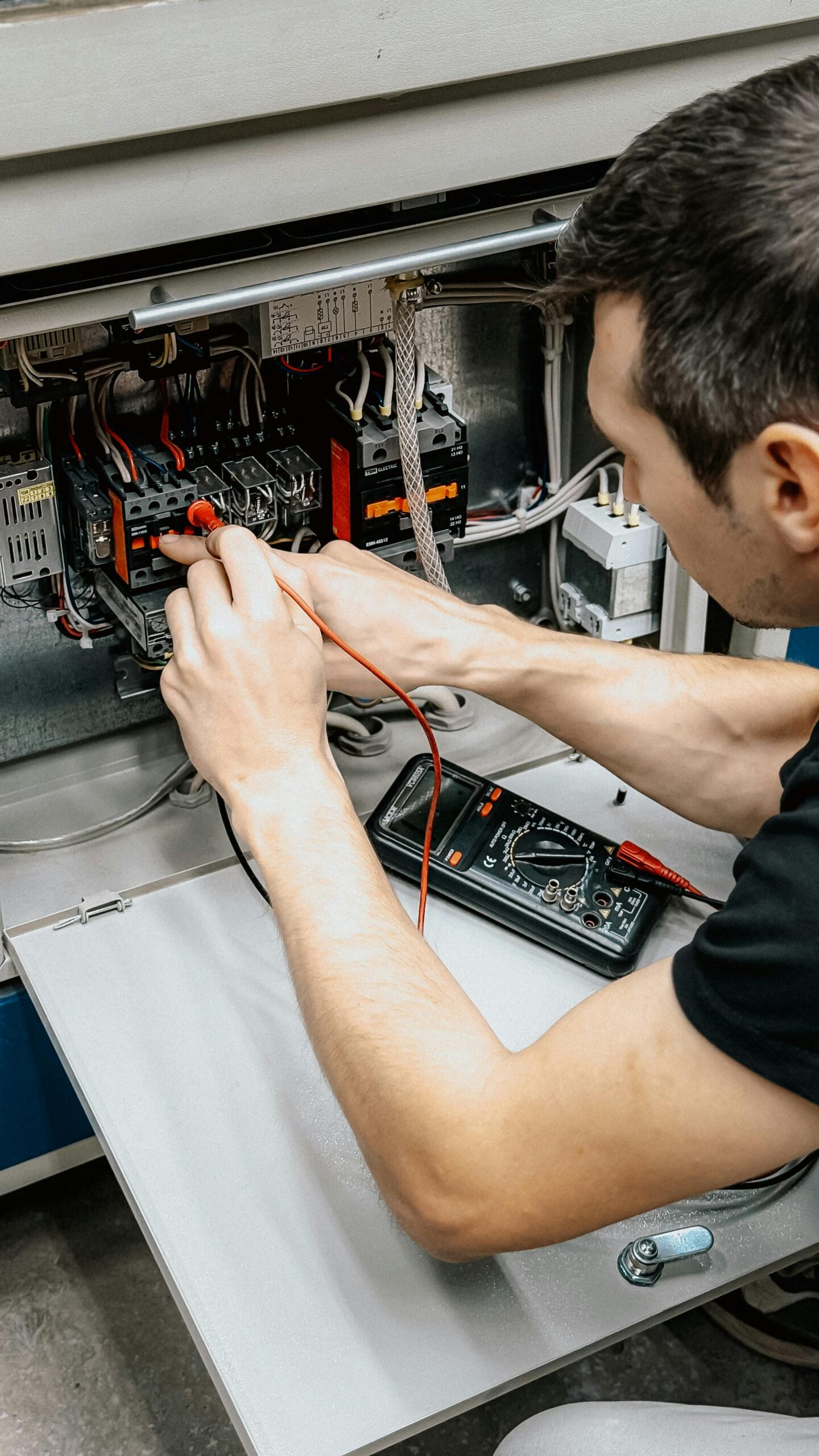
Laptops, powerboards, kettles. Most workplaces have the obvious stuff covered. But when it comes to knowing how to test and tag everything that needs it, a few items always slip through the cracks. And those cracks can become serious compliance issues.
In NSW alone, five workplace fatalities were recorded in 2023 due to contact with electricity. Electrical safety isn’t just about passing an audit, but about keeping people safe.
Under AS/NZS 3760:2022, any portable plug-in appliance used in a workplace needs to be inspected, tested, and tagged at appropriate intervals. The standard applies broadly to offices, schools, warehouses, and everything in between.
Here are five items that often don’t make the list that might put you at risk.
Quick Answers
- Staff microwaves, extension leads in server rooms, vacuum cleaners, electric staplers and shredders, and forklift battery chargers all need to be tested and tagged
- Forgetting these items can result in audit failures, insurance complications, and safety risk to staff
- Under AS/NZS 3760:2022, if it plugs in and it’s used at a workplace, it almost certainly needs testing
- A professional test and tag service will identify every in-scope item, so nothing gets overlooked
1. The Staff Kitchen Microwave
Microwaves sit in break rooms and get used constantly, often by people who didn’t notice the fraying cord or the cracked plug housing. Because they’re considered “just the kitchen microwave,” they often miss the cut when test-and-tag schedules are planned.
But a staff microwave is a workplace appliance. It needs to be tested and tagged, just like anything else. The same logic applies to the toaster, the bar fridge, and the office coffee machine. If it plugs into the wall and your staff use it at work, it’s in scope under AS/NZS 3760:2022.
2. Extension Leads in Server Rooms
This one surprises many IT managers. Extension leads and power boards in server rooms are often buried behind racks, permanently plugged in, and treated as part of the infrastructure rather than as portable appliances that need regular testing.
The reality is that extension leads are among the most commonly tested items under the standard. They’re subject to wear, overloading, and heat stress, particularly in server rooms where they may never be unplugged. That consistent use doesn’t exempt them; if anything, it makes regular testing more important.
If your IT team manages the equipment in that room, make sure what needs to be tested and tagged is on their checklist alongside the servers themselves.
3. Vacuum Cleaners and Cleaning Equipment
Commercial vacuum cleaners get dragged across floors, bumped into furniture, and stored in cupboards between uses. Cords get kinked. Plugs get knocked. It’s exactly the kind of physical wear that test-and-tag inspections are designed to catch.
Cleaning equipment (including commercial vacuums, steam cleaners, and floor polishers) is explicitly referenced as in-scope equipment under AS/NZS 3760:2022. Whether your cleaner is in-house staff or a contract service, the appliances they use on your premises are your compliance responsibility.
4. Electric Staplers, Shredders, and Small Office Appliances
Offices are full of small powered appliances that rarely get a second thought: electric staplers, paper shredders, laminators, charging docks, and desktop fans. These items sit on desks or in stationery rooms, are handled regularly, and are almost never on the test-and-tag list.
Understanding what needs to be tested and tagged in an office environment means looking beyond the obvious IT equipment. Anything with a cord and a plug that’s used at the workplace is in scope. That includes the shredder in the accounts office, the laminator in the print room, and the fan on the reception desk.
5. Forklift Battery Chargers
Warehouses and distribution centres tend to be on top of test-and-tag for power tools and extension leads. Forklift chargers, though, often get overlooked.
A forklift charger is a high-draw plug-in appliance. It runs for extended periods in environments that may involve dust, moisture, or vehicle movement, which are all conditions that increase wear and the risk of insulation breakdown. Under AS/NZS 3760:2022, battery chargers (including forklift chargers) are explicitly covered as in-scope equipment.
Knowing how to test and tag this type of appliance matters particularly in warehouse settings, where an electrical fault in a high-draw charger could have serious consequences.
What Happens If These Items Are Missed?
Missing items from your test and tag schedule creates a few distinct risks.
- Audit failures. During a safety audit or WHS inspection, missing tags (or no record of testing for specific items) will be flagged. This can result in improvement notices, compliance orders, or fines, depending on the jurisdiction.
- Insurance complications. Many business insurers require evidence of compliance with AS/NZS 3760:2022. If an electrical incident occurs and items weren’t tested, a claim can be disputed or declined.
- Genuine safety risk. The testing process exists because faulty insulation, damaged cords, and degraded earthing can cause electric shock, fire, or equipment failure. Untested items carry that risk, regardless of how innocuous they look.
How to Make Sure Nothing Gets Missed
The most practical way to ensure complete coverage is to have a professional conduct a full site walkthrough before testing begins. A qualified technician will identify every in-scope appliance, rather than working from a list you’ve compiled yourself.
If you’re managing a workplace in Sydney or the Southern Highlands, our test and tag services include a comprehensive on-site assessment, ensuring every qualifying appliance is identified, tested, and documented correctly. We provide a full testing register after each visit, which is what auditors and insurers want to see.
It’s also worth noting that new equipment needs to be tested and tagged before first use in most workplace environments, which is another common gap worth checking.
If you’re not sure whether your current schedule covers everything it should, get in touch with the team at Amp It Up. We’ll assess your site, answer your compliance questions, and make sure your workplace is fully covered.